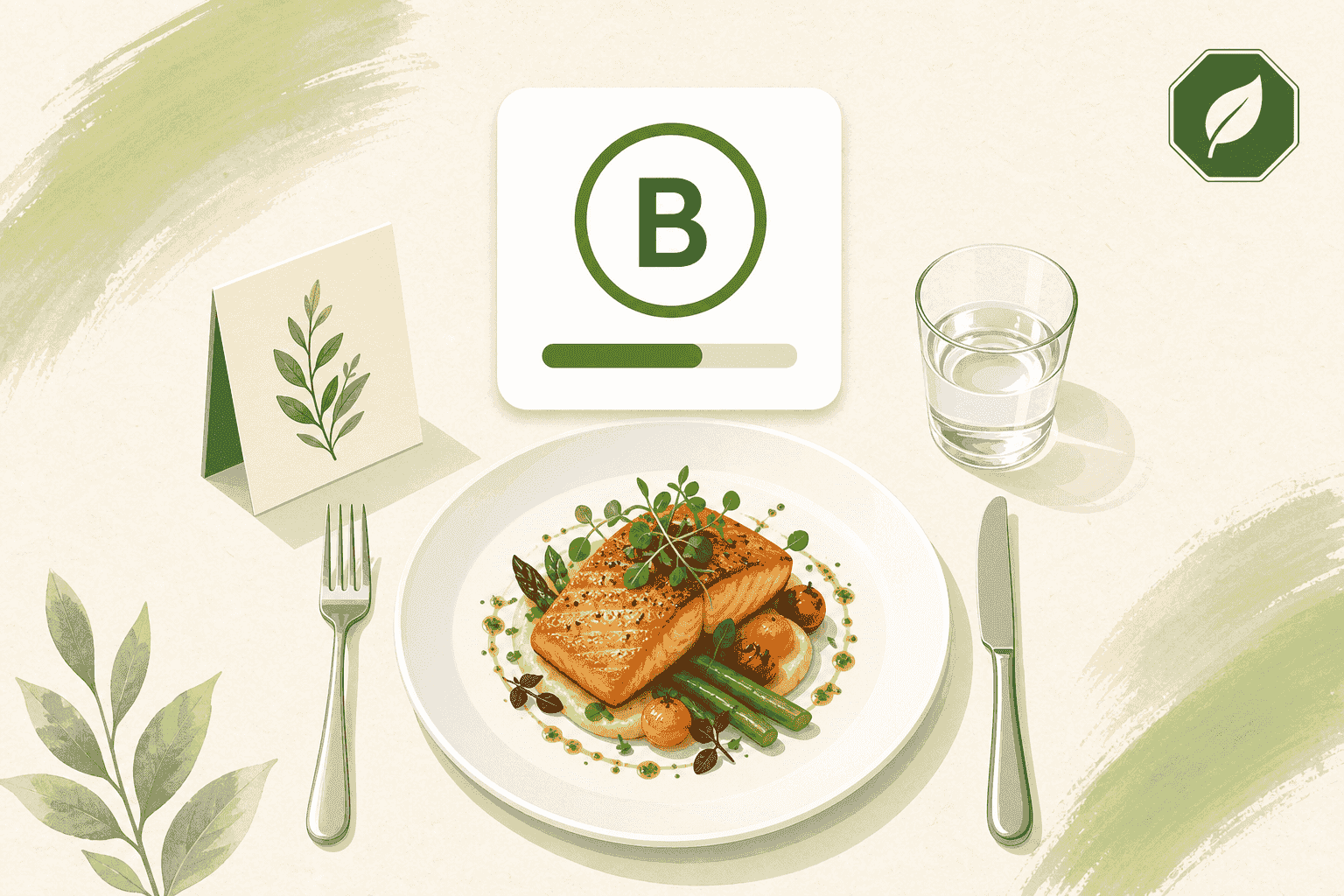
Restaurants don't hand out nutrition labels. There's no barcode on a plate, no ingredient panel on a menu — which is exactly why eating out has always been the blind spot in eating well.
Meals & Recipes closes it. Because a meal is built from ingredients you type rather than a label you scan, the dish in front of you at your favorite restaurant works just as well as the one on your own stove.
Build the dish at the table
- Open Meals & Recipes and tap New meal or recipe.
- Title it with the restaurant and the dish — "Bella's chicken parmesan."
- Read the menu description and add what it names: chicken breast, breadcrumbs, mozzarella, marinara, pasta, olive oil.
- Leave quantities blank and stay in Quick mode.
- Snap a photo of the plate.
- Tap Generate score.
You'll have a Meal Intelligence Score and a letter grade before your food gets cold.
Getting a good read from a menu
Menus are marketing, but they're more honest than they look. A few habits help:
- Take the description literally. "Crispy" usually means fried. "Creamy" usually means butter or cream. Add those.
- Don't forget what's underneath. Rice, pasta, fries, and bread often make up most of the plate.
- Include the sauce and the oil. They frequently drive the result more than the protein does.
- Ask your server. Most kitchens will happily tell you what's in a dish, and the answers are usually more specific than the menu.
Order the same dish often? Build it once, save it, and refine it over a few visits until it reflects what's really on the plate.
Be honest about what it is
A restaurant score is an educated estimate built from what you told it, not a lab analysis of that specific plate. Portions vary, kitchens improvise, and no two chefs cook alike.
That's why these scores usually carry a provisional badge — and why we show it rather than hide it. The truth is in the ingredients, and at a restaurant you're working from the ingredients you can name.
Used that way, it's genuinely useful: it won't tell you the exact sodium in tonight's dinner, but it will tell you which two dishes on the menu are in different leagues.
Compare before you order
The real power is in the choosing:
- Build the two dishes you're deciding between.
- Compare the grades.
- Order the better one.
Do this a few times at the places you go most and you'll build a small library of the dishes worth ordering — and the ones worth skipping.
Share it around the table
Nobody wants a lecture over dinner. A link is easier.
- Tap Share and send the report to whoever you're eating with. They don't need an account to open it.
- Premium members can post the meal to Quorum, where it lands in the Meals feed for other members to rate and discuss.
Restaurant dishes are some of the most useful things to post. A packaged product is the same in every store, but a menu item is one person's honest read — and the next member deciding what to order will be glad you shared it.
Next: Share a meal or recipe