How grades work
A grade you can understand, built from the ingredients.
Every GMOScan grade starts with what is actually in the food: the ingredient list and the label. Here is what a grade looks at, where the data comes from, and what a grade is not.
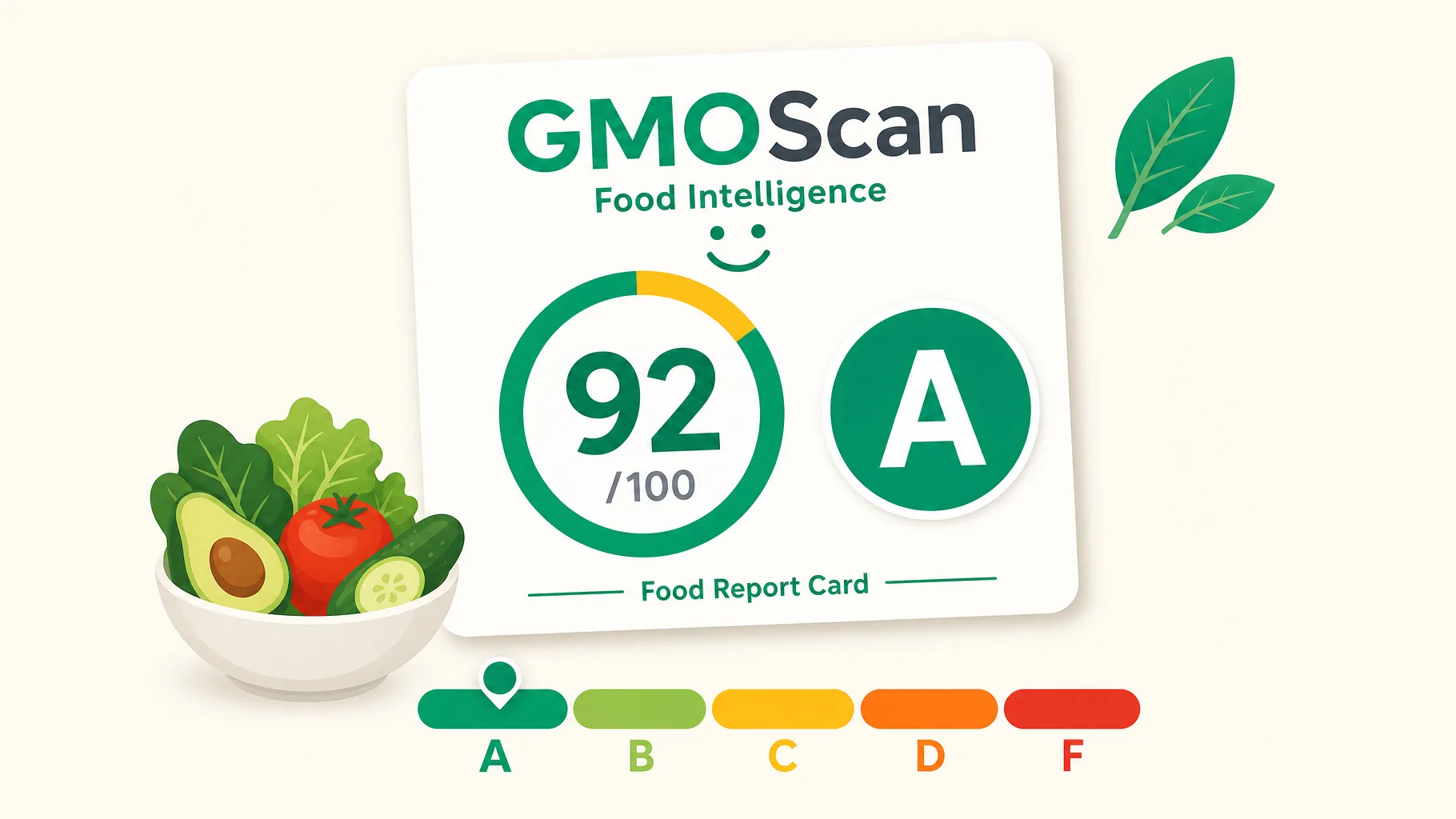
What a grade looks at
Four plain questions
Each grade is a quick answer to the same four questions, shown as a familiar A–F letter. The detailed report explains the answer for that specific product or dish.
How nourishing it is
The balance of nutrients such as protein, fiber, sugar, and sodium.
How clean the ingredients are
Short, simple ingredient lists do better than long lists full of additives.
How processed it is
Foods close to their whole form do better than heavily processed ones.
How much we know
When a label does not give enough detail to judge fairly, the grade says so instead of guessing.
What gets graded
Foods, meals, and beauty products
Packaged foods
Scan a barcode or search by name. The grade comes from the product’s ingredient list and nutrition label. Organic and non-GMO signals on the label count, too.
Meals and recipes
Home-cooked or restaurant dishes are graded from the ingredients you enter. When you do not supply amounts, typical portions are estimated and the result is marked provisional.
Beauty products
Cosmetics and personal-care products are graded from their ingredient list on safety, processing, sustainability, and how complete the product data is.
Where the data comes from
Labels and public product data
Product details come from the label and from public product databases, including Open Food Facts, Open Beauty Facts, and USDA FoodData Central. For meals, the data is the ingredient list you enter. See our data sources for each source’s licence.
The detailed report is written with automated and AI systems from that same information, so it explains the grade in plain language instead of numbers.
We keep the detailed scoring method internal so grades stay hard to game. What matters for a shopper — why a product or dish earned its grade — is spelled out in every report.
Independence
Built for the people eating the food
No ads in the app
GMOScan does not use third-party advertising or analytics SDKs. Members are not the product.
We do not sell your data
We collect only what we need to run the service, and we never sell your personal information.
The label decides
A grade comes from what is in the product or dish: its ingredients and label data.
Member opinions stay separate
Quorum ratings show what members think. They appear alongside the GMOScan grade and never change it.
What a grade is not
Educational, not medical
GMOScan is an educational tool only, not a medical device or lab test. Not suitable for diagnosing life-threatening allergies.
A grade is not a lab test of a specific package or plate, and it does not diagnose, treat, or prevent any condition. If you manage allergies or a medical diet, always read the physical label and follow your clinician or dietitian.
Spotted product data that looks wrong? Email appservices@gmoscan.com and we will take a look.
Learn more