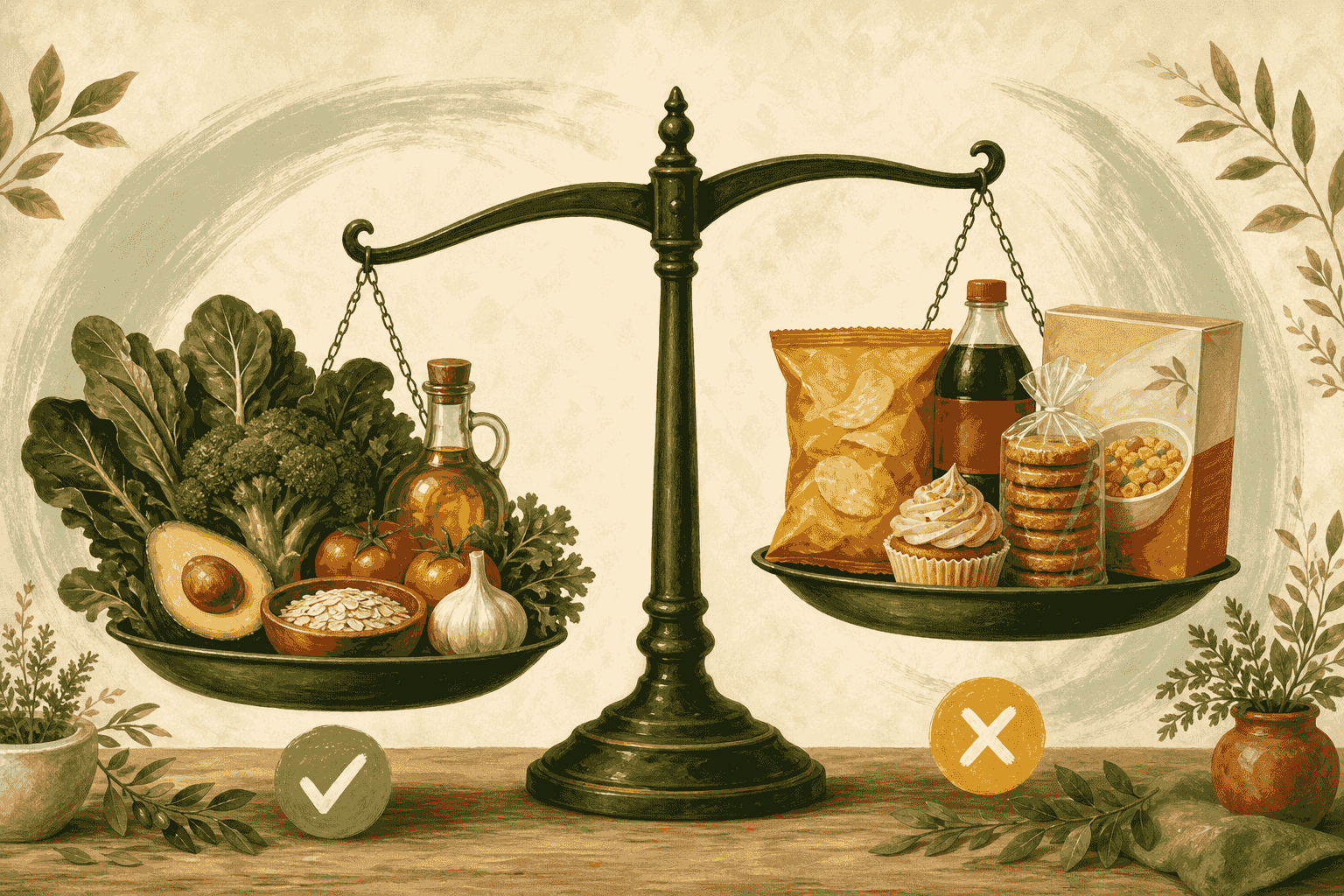
Not all foods are made the same way. Some are close to how they grow; others are built in a factory from lots of refined ingredients. GMOScan helps you tell the difference at a glance, so you can lean toward simpler foods more often.
Four kinds of foods, in plain language
- Whole or barely touched — foods close to nature (fresh fruit, plain oats, eggs).
- Simple kitchen staples — basics you'd cook with (oil, butter, sugar, salt).
- Everyday packaged foods — simple foods with a little added salt or sugar (canned vegetables, cheese).
- Heavily processed — long ingredient lists full of additives and things you wouldn't keep in your own kitchen (many snacks, sodas, ready meals).
Food scientists call this last group "ultra-processed." You don't need the label — GMOScan flags it for you.
How to use it
- Scan or search a product.
- Look for the processing note in the report.
- When the ingredient list is long and full of unfamiliar names, that's a sign it's heavily processed.
- Compare it against a simpler option.
A quick habit
If two products are similar, the one with the shorter, more recognizable ingredient list is usually the better-for-you choice.